AI threat intelligence platform
Automated Vulnerability Scanning for SMB IT Leaders: Streamlining Security Operations
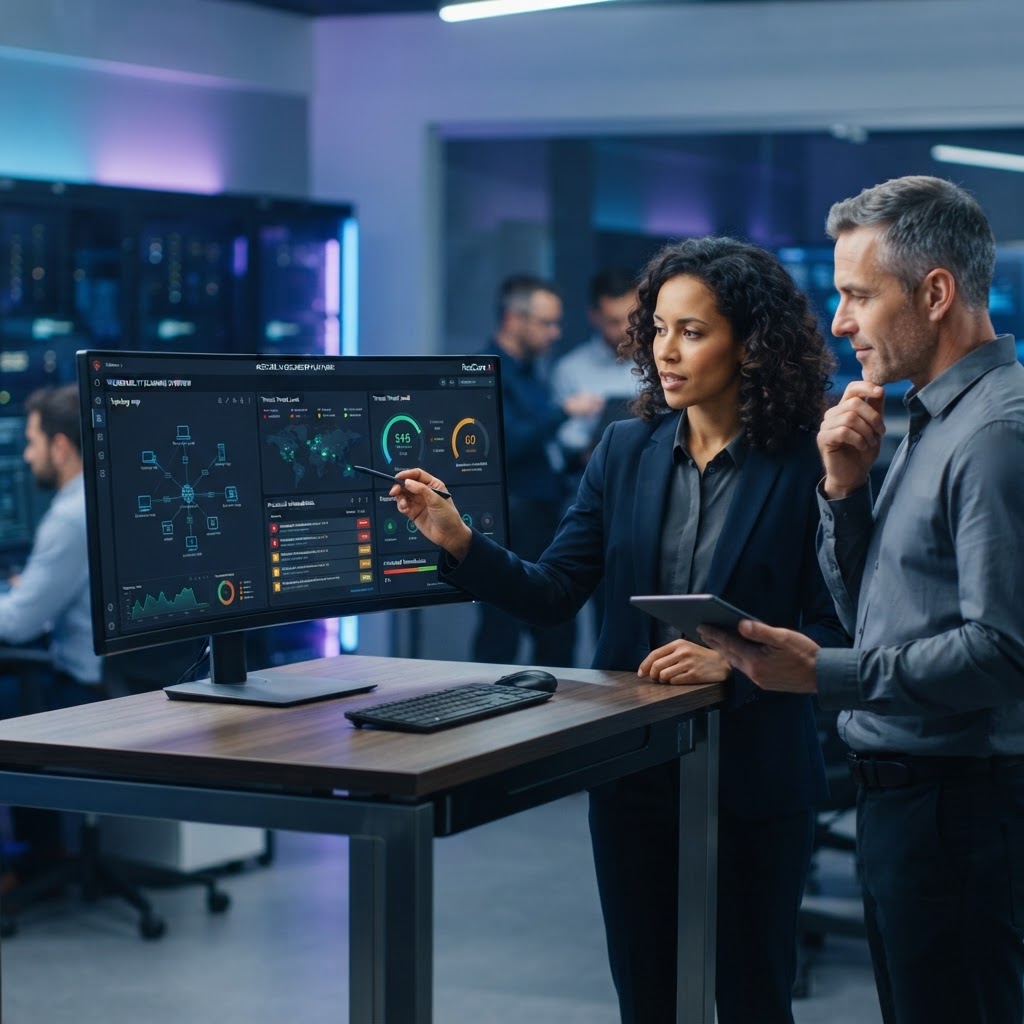
Automated Vulnerability Scanning for SMB IT Leaders: Streamlining Security Operations
In today's rapidly evolving digital landscape, small and mid-market businesses (SMBs) face the same sophisticated cyber threats as larger enterprises, often with far fewer resources. For SMB IT leaders, the challenge isn't just identifying potential vulnerabilities, but doing so efficiently, consistently, and without overwhelming already stretched teams. This is where automated vulnerability scanning for SMB IT leaders becomes not just a best practice, but a critical necessity for maintaining a robust security posture.
This article will guide you through understanding the power of automated vulnerability scanning, its indispensable role for SMBs, key features to look for, and how to effectively implement it. We'll also explore how integrating scanning with a broader AI threat intelligence platform can elevate your security operations, helping you protect your assets and reputation.
What is Automated Vulnerability Scanning?
Automated vulnerability scanning is a proactive cybersecurity process that uses specialized software to identify security weaknesses in computer systems, networks, and applications. Unlike manual assessments, automated scanners can quickly and systematically check for thousands of known vulnerabilities, misconfigurations, and compliance issues across your entire digital infrastructure.
These scanners work by sending requests to target systems and analyzing their responses against a comprehensive database of known vulnerabilities. When a potential weakness is detected, the scanner generates a report detailing the vulnerability, its severity, and often provides recommendations for remediation. This process is designed to be repeatable, scalable, and significantly faster than human-led assessments, making it ideal for the dynamic environments of SMBs.
Key Benefits for SMBs
For SMBs, the advantages of automated vulnerability scanning are clear:
- Efficiency and Speed: Scans can be run frequently and quickly, identifying new vulnerabilities as soon as they emerge, without consuming significant IT staff time.
- Cost-Effectiveness: Reduces the need for expensive manual security audits, offering a more budget-friendly approach to continuous security assessment.
- Comprehensive Coverage: Automated tools can scan a vast array of assets—from network devices and servers to web applications and cloud instances—ensuring fewer blind spots.
- Consistency: Provides standardized, repeatable assessments, eliminating human error and ensuring consistent application of security policies.
- Proactive Risk Management: Helps identify and address weaknesses before attackers can exploit them, significantly reducing the risk of a breach.
Why SMB IT Leaders Need Automated Vulnerability Scanning
SMBs are increasingly targeted by cybercriminals who perceive them as easier targets than large corporations. Data breaches can be catastrophic, leading to financial losses, reputational damage, regulatory fines, and even business closure. For SMB IT leaders, the pressure to secure their organizations is immense, often with limited budgets and personnel.
Automated vulnerability scanning addresses several critical pain points for SMBs:
- Limited Resources: Many SMBs lack dedicated cybersecurity teams or have IT staff wearing multiple hats. Automated tools act as an extension of their team, performing essential security checks autonomously.
- Growing Threat Landscape: The volume and sophistication of cyber threats are constantly increasing. Manual methods simply cannot keep pace with new vulnerabilities emerging daily.
- Compliance Requirements: Many industries have regulatory requirements (e.g., GDPR, HIPAA, PCI DSS) that mandate regular security assessments. Automated scanning helps demonstrate due diligence and maintain compliance.
- Digital Transformation: As SMBs adopt cloud services, remote work, and new technologies, their attack surface expands. Automated scanning helps manage this complexity by continuously monitoring new and existing assets.
The Cost of Neglecting Vulnerabilities
Ignoring vulnerabilities is a gamble no SMB can afford. The consequences can be severe:
- Data Breaches: Loss of sensitive customer data, intellectual property, or financial information.
- Financial Losses: Costs associated with incident response, legal fees, regulatory fines, and business disruption.
- Reputational Damage: Loss of customer trust and damage to brand image, which can be difficult to recover from.
- Operational Downtime: Systems rendered inoperable by attacks, leading to lost productivity and revenue.
Proactive identification through automated scanning is far more cost-effective than reactive damage control.
Essential Features of an Automated Vulnerability Scanner for SMBs
When evaluating automated vulnerability scanning solutions, SMB IT leaders should prioritize features that align with their specific needs and resource constraints. Look for a platform that offers:
- Ease of Use and Deployment: A user-friendly interface and straightforward setup are crucial for teams with limited specialized security expertise.
- Comprehensive Scanning Capabilities:
- Network Scanning: Identifies vulnerabilities in network devices, servers, and open ports.
- Web Application Scanning (WAS): Detects flaws in web applications, including OWASP Top 10 vulnerabilities.
- Cloud Environment Scanning: Monitors configurations and vulnerabilities in public cloud infrastructure (AWS, Azure, GCP).
- Internal and External Scanning: Covers both perimeter defenses and internal network weaknesses.
- Accurate Reporting and Prioritization: Clear, actionable reports that detail vulnerabilities, their severity, and recommended remediation steps. The ability to prioritize risks based on business impact is key.
- Integration Capabilities: Seamless integration with existing IT tools like ticketing systems, SIEMs, and other security platforms for a unified security workflow.
- Scalability: The ability to grow with your business, easily adding new assets as your infrastructure expands.
- Regular Updates: The scanner's vulnerability database must be continuously updated to detect the latest threats.
- AI-Powered Insights: An AI threat intelligence platform can go beyond basic scanning, using AI to contextualize threats, predict attack paths, and provide more intelligent prioritization.
Implementing Automated Vulnerability Scanning: A Practical Guide for SMBs
Implementing an automated vulnerability scanning program doesn't have to be complex. Here’s a practical approach for SMB IT leaders:
- Define Your Scope: Identify all assets that need to be scanned, including servers, workstations, network devices, web applications, and cloud instances. Prioritize critical assets first.
- Choose the Right Tool: Select an AI threat intelligence platform that includes robust automated vulnerability scanning, like RedCore AI. Ensure it meets the essential features outlined above and fits your budget.
- Configure and Schedule Scans: Set up your scanner according to your environment. Establish a regular scanning schedule (e.g., weekly for critical systems, monthly for others) and consider event-driven scans after significant changes.
- Interpret Results and Prioritize: Review scan reports. Focus on high-severity vulnerabilities first, especially those that are easily exploitable or impact critical business functions. Don't get overwhelmed by low-priority findings initially.
- Remediate Vulnerabilities: Develop a clear plan for addressing identified weaknesses. This might involve patching software, reconfiguring systems, updating firewalls, or implementing new security controls. Document all remediation efforts.
- Verify and Repeat: After remediation, run another scan to confirm that vulnerabilities have been successfully closed. Cybersecurity is an ongoing process, so continuous scanning and remediation are vital.
Best Practices for Effective Scanning
- Regularity is Key: Consistent scanning helps catch new vulnerabilities quickly.
- Contextualize Findings: Understand the business impact of each vulnerability. Not all 'critical' vulnerabilities are equally critical to your specific operations.
- Manage False Positives: Learn to distinguish between genuine threats and false alarms to avoid wasted effort.
- Integrate with IT Operations: Ensure security findings are integrated into your existing IT management and patching workflows.
- Educate Your Team: Ensure your IT team understands the importance of scanning and how to interpret and act on reports.
Beyond Scanning: Integrating with Broader Threat Intelligence
While automated vulnerability scanning is foundational, a truly resilient security posture for SMBs requires a more holistic approach. Vulnerability scanning identifies weaknesses within your systems, but it's even more powerful when combined with external threat intelligence.
This is where an AI threat intelligence platform like RedCore AI becomes invaluable. Beyond just scanning, it offers:
- Dark Web Monitoring: Scans illicit online communities for mentions of your company, stolen credentials, or other data that could indicate an imminent threat. This provides an external view of potential attacks targeting your organization.
- Attack Surface Management: Continuously maps and monitors all your internet-facing assets, identifying shadow IT, misconfigurations, and forgotten assets that could be exploited. This ensures your vulnerability scans cover everything that could be a target.
- AI-Powered Correlation: An AI threat intelligence platform can correlate internal vulnerability data with external dark web threats and your overall attack surface. This allows for more intelligent prioritization of vulnerabilities, focusing on those most likely to be exploited by active threats against your specific organization.
By integrating these capabilities, SMB IT leaders gain a comprehensive view of their risk landscape, moving from reactive security measures to a proactive, predictive defense strategy. RedCore AI provides the tools to not only find vulnerabilities but also understand the real-world threats targeting them.
Choosing the Right AI Threat Intelligence Platform for Your SMB
Selecting the right platform is a strategic decision for any SMB IT leader. Consider these factors when evaluating an AI threat intelligence platform that includes automated vulnerability scanning:
- Comprehensive Feature Set: Does it offer dark web monitoring, attack surface management, and robust vulnerability scanning in one integrated platform?
- Scalability and Flexibility: Can it easily adapt to your business's growth and changing IT environment?
- Reporting and Analytics: Are the reports clear, actionable, and customizable? Does it provide dashboards that offer quick insights into your security posture?
- Support and Training: What kind of customer support is available? Are there resources to help your team get up to speed?
- Cost-Effectiveness: Does the platform offer a strong return on investment by consolidating multiple security functions and reducing the risk of breaches?
- Vendor Reputation: Choose a provider with a proven track record and positive customer reviews.
RedCore AI is designed specifically for SMBs and mid-market companies, offering an integrated AI threat intelligence platform that simplifies complex security challenges. With dark web monitoring, attack surface management, and automated vulnerability scanning, redcore-ai empowers IT leaders to gain control over their cybersecurity with expert guidance and practical tools.
Take Control of Your SMB's Security Today
Automated vulnerability scanning is a cornerstone of modern cybersecurity for SMB IT leaders. It provides the efficiency, consistency, and depth needed to protect your organization from an ever-growing array of threats. By adopting a comprehensive AI threat intelligence platform like RedCore AI, you can move beyond basic scanning to a truly proactive and intelligent security posture.
Don't leave your business vulnerable to preventable attacks. Empower your team with the tools to identify, prioritize, and remediate risks effectively. To see how RedCore AI can transform your security operations and provide peace of mind, we invite you to Book a Demo today.
Frequently Asked Questions
What's the difference between vulnerability scanning and penetration testing?
Vulnerability scanning automatically identifies known weaknesses in systems, networks, and applications by comparing them against a database of known flaws. It's a broad, automated check. Penetration testing, on the other hand, is a manual process where security experts simulate a real-world attack to exploit identified vulnerabilities and uncover deeper, more complex security flaws, assessing the overall resilience of a system against a determined attacker.
How often should SMBs perform automated vulnerability scans?
For SMBs, a minimum of monthly automated vulnerability scans is recommended to keep pace with new threats and changes in the IT environment. For critical systems, web applications, or after significant infrastructure changes (e.g., new deployments, major updates), weekly or even daily scans are advisable. The goal is continuous monitoring to catch vulnerabilities before they can be exploited.
Can automated scanning replace a dedicated security team for an SMB?
No, automated vulnerability scanning cannot fully replace a dedicated security team or the expertise of an IT leader. While automated tools are incredibly efficient at identifying vulnerabilities, human insight is crucial for interpreting complex results, prioritizing remediation based on business context, managing false positives, strategizing overall security posture, and responding to actual incidents. Automated scanning is a powerful tool that significantly *augments* a security team's capabilities, allowing them to focus on higher-level strategic tasks rather than manual, repetitive checks.
Ready to try RedCore AI?
AI threat intelligence platform
Book a Demo